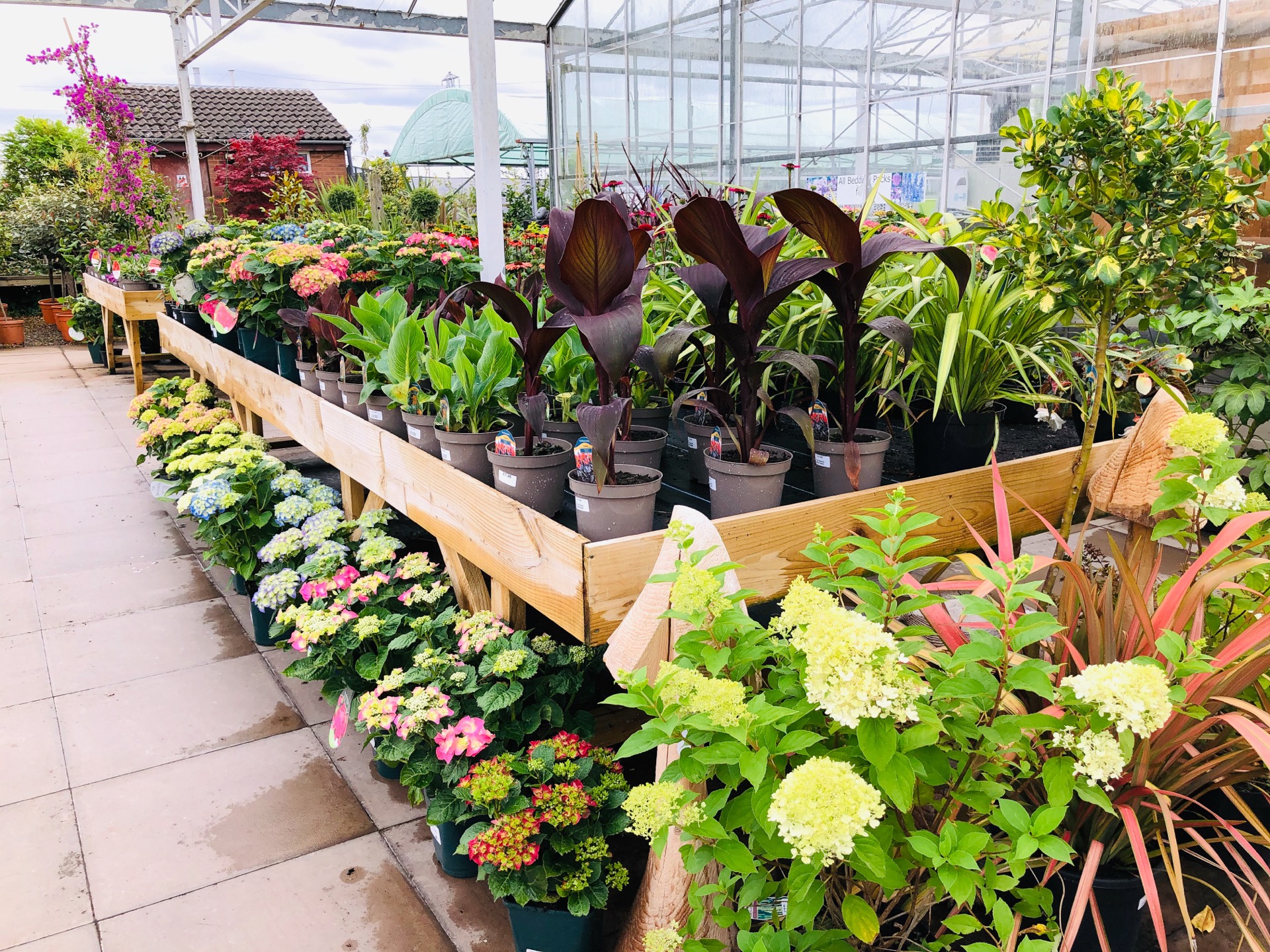
16 Varieties Grown Locally
Hydrangeas
One of our most popular collections. From classic mopheads to elegant panicles, we grow 16 Hydrangea varieties at our Staffordshire nurseries, perfectly suited to local gardens.
One of our most popular collections. From classic mopheads to elegant panicles, we grow 16 Hydrangea varieties at our Staffordshire nurseries, perfectly suited to local gardens.
Hydrangeas are one of our most popular collections, and for good reason. These versatile shrubs deliver months of spectacular colour from summer through autumn, thrive in our Staffordshire climate, and many are surprisingly happy in the heavy clay soil common throughout the region.
We grow four distinct types of Hydrangea at our nurseries. Paniculata varieties like 'Limelight' and 'Vanille Fraise' produce stunning cone-shaped flower heads that age beautifully through the season. Macrophylla types are the classic garden hydrangeas with mophead or lacecap blooms, whose colours can be influenced by your soil pH. Serrata hydrangeas such as 'Summer Glow' offer delicate flowers and exceptional autumn foliage. And the reliable arborescens 'Annabelle' produces enormous white snowball blooms.
All our hydrangeas are container-grown here in Staffordshire, which means they are already acclimatised to the local conditions. Our team can advise on the best variety for your garden's aspect, soil type, and the effect you want to achieve.
Cone-shaped flowers, prune hard in spring
Classic round blooms, colour changes with soil pH
Delicate lacecap flowers, excellent autumn colour
Large white snowball flowers, very hardy
Unique varieties with exceptional characteristics
Hydrangeas are surprisingly tolerant of Staffordshire's heavy clay soil, especially if you improve drainage with organic matter. Most prefer partial shade or a sheltered spot with morning sun.
Paniculata varieties are the most sun-tolerant and cope best with clay. Macrophylla types appreciate dappled shade and moisture-retentive soil.
Different hydrangeas need different pruning. Paniculata types flower on new wood, so prune hard in March for bigger blooms. Macrophylla and serrata flower on old wood, so just remove dead wood and spent flowers.
Arborescens can be cut back hard each spring. When in doubt, ask our team for variety-specific advice.
Macrophylla hydrangeas can change colour based on soil pH. Acid soil produces blue flowers, alkaline soil gives pink blooms. Staffordshire's clay is typically neutral to slightly alkaline, so most will be pink or purple.
Want blue hydrangeas? We can advise on using ericaceous compost and aluminium sulphate to lower the pH around your plants.
Most hydrangeas flower from June through September, with some varieties continuing into October. Paniculata types typically start in July and their flowers age beautifully through autumn, changing from white to pink to russet. Macrophylla varieties bloom from June onwards. The timing can vary by a week or two depending on the season and your garden's microclimate.
You can change the colour of macrophylla hydrangeas by altering soil pH. For blue flowers, make the soil more acidic using ericaceous compost or aluminium sulphate. For pink flowers, add lime to make it more alkaline. It takes several months to see results. Paniculata, serrata, and arborescens types do not change colour with pH.
Paniculata hydrangeas are the best choice for heavy clay soil. Varieties like 'Limelight', 'Vanille Fraise', and 'Wim's Red' are tough, reliable, and cope well with less-than-perfect drainage. Macrophylla types will also grow in clay if you improve it with organic matter at planting time. Our team can recommend the best variety for your specific garden conditions.
Pruning depends on the type. Paniculata and arborescens hydrangeas should be pruned in late February or March before new growth starts. Macrophylla and serrata types need minimal pruning, just remove dead wood and spent flowers in spring. Never prune these in autumn as you will remove next year's flower buds. If you are unsure which type you have, bring a photo to either of our centres and we will identify it for you.
Yes, most hydrangeas tolerate partial shade and some prefer it. Macrophylla and serrata types are ideal for shady spots with dappled light or morning sun. They will struggle in deep shade. Paniculata varieties are more sun-tolerant but still appreciate some shade in hot afternoons. Avoid planting in exposed, windy positions as the large leaves can scorch.
Our knowledgeable team can advise on the best variety for your garden's conditions and the effect you want to achieve. Pop in or give us a call.
Eccleshall, ST21 6BD
Our historic walled nursery in Eccleshall, where many of our hydrangeas are grown in sheltered conditions perfect for establishing strong, healthy plants.
Best for:
Nr Stone, ST15 0QA
Our larger garden centre near Stone, with an extensive plant area featuring a wide selection of container-grown hydrangeas ready to take home.
Best for:
Percy here!
Need a hand with your garden? I've been growing plants for 40 years - ask me anything!
Percy - Garden Expert
40 years of growing wisdom
Afternoon! Percy here. Been pottering around gardens for over 40 years now, and there's not much I haven't seen. What can I help you with today - got a poorly plant, planning a new border, or just fancy a chat about what's looking good this season?
Quick questions: